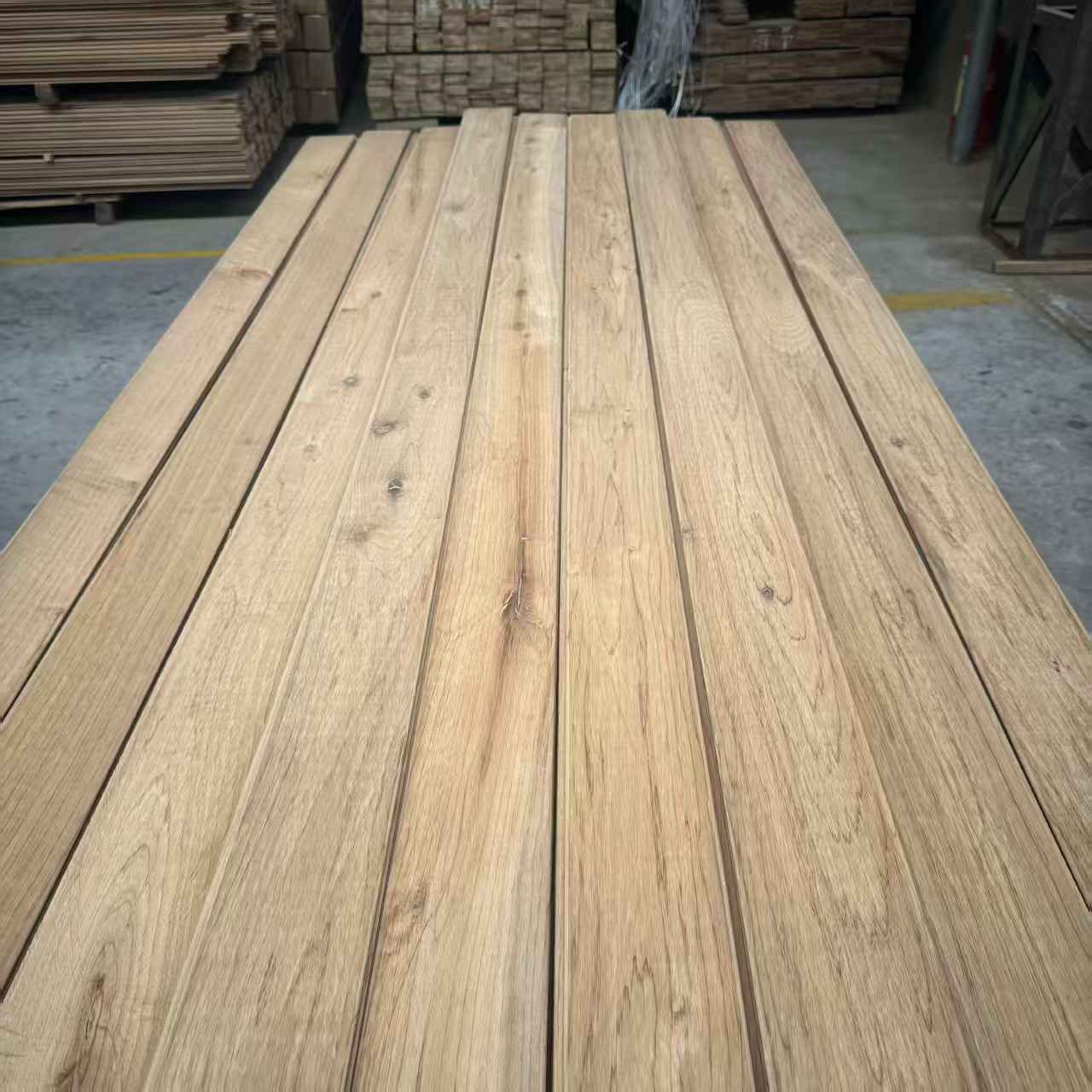
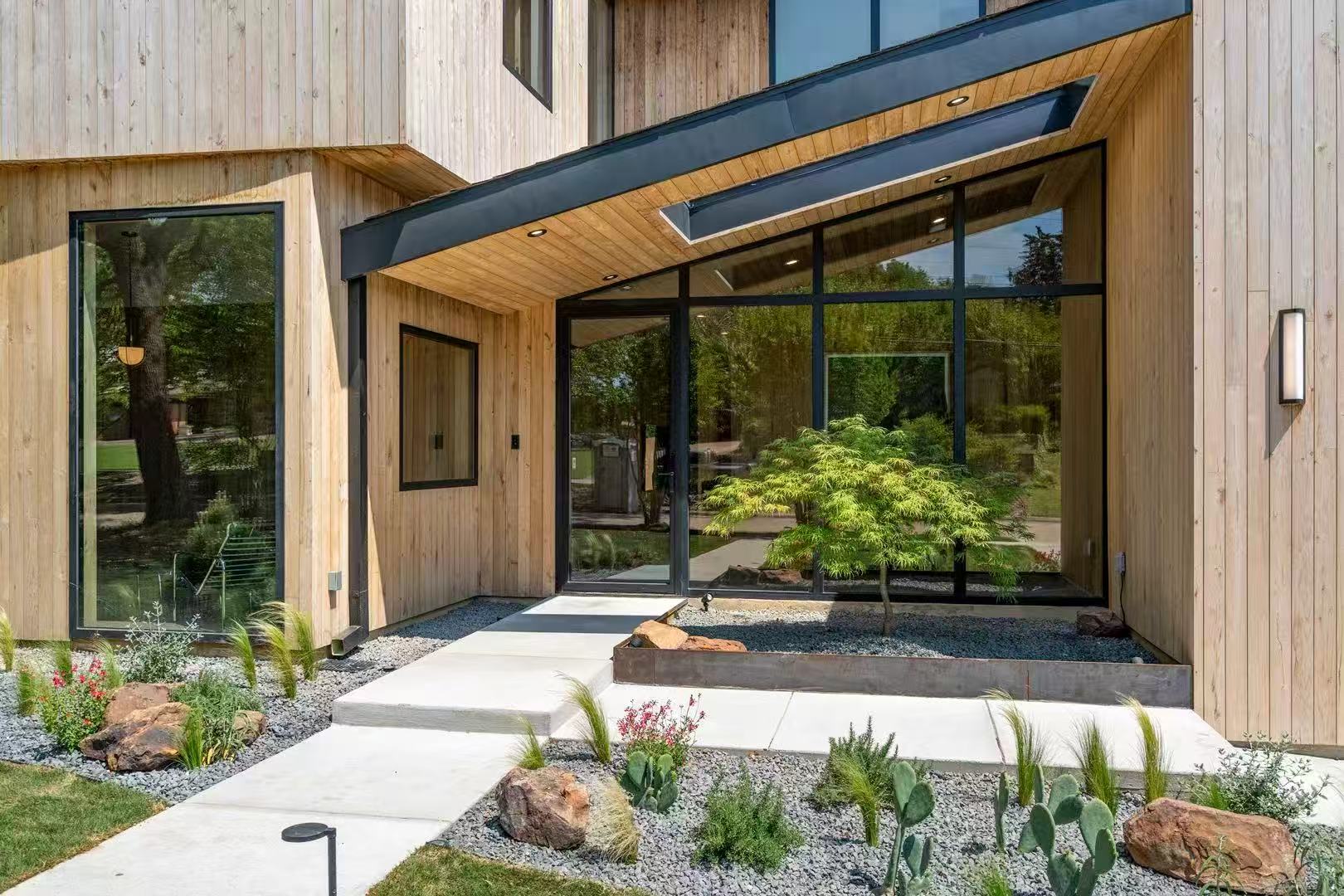
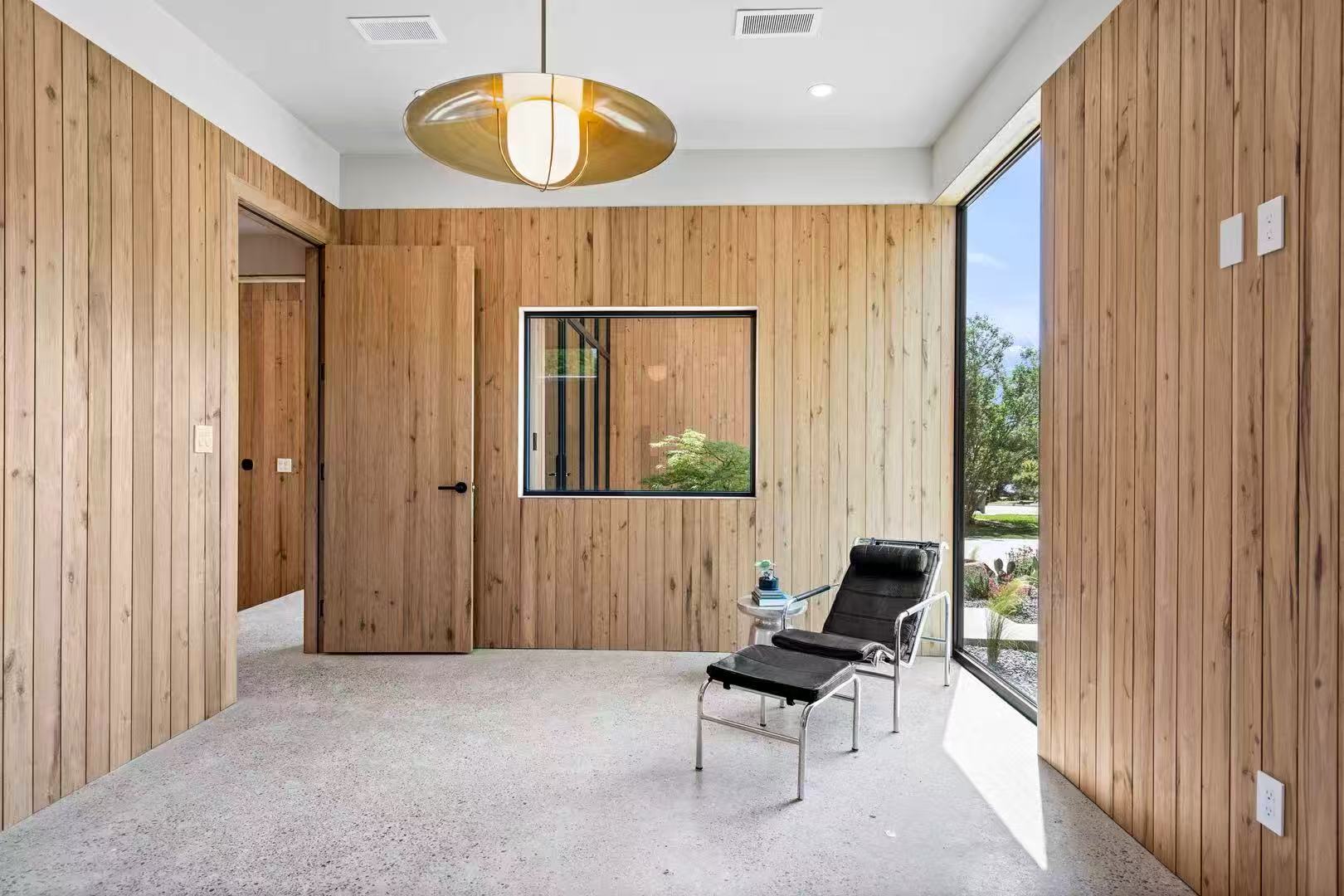
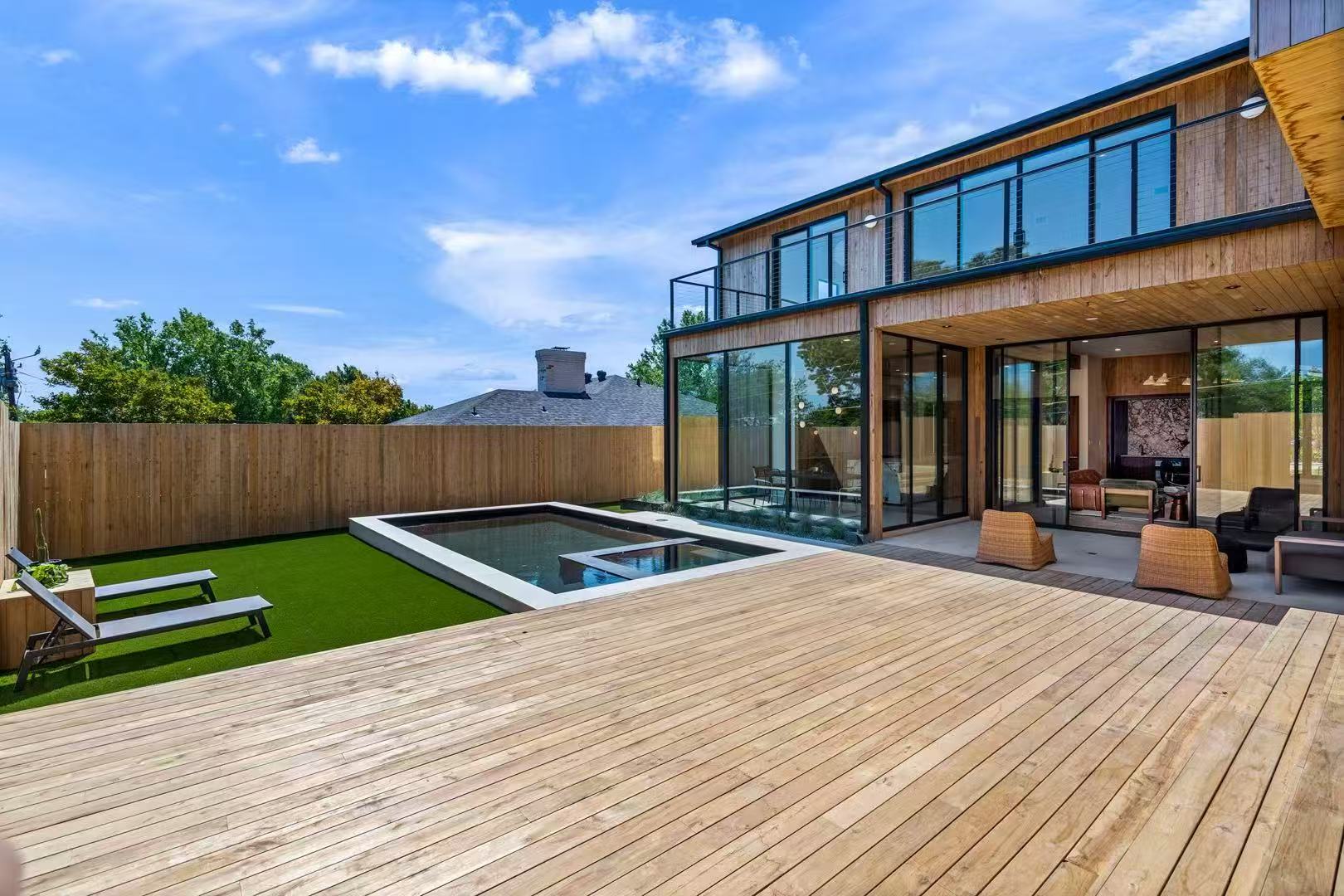
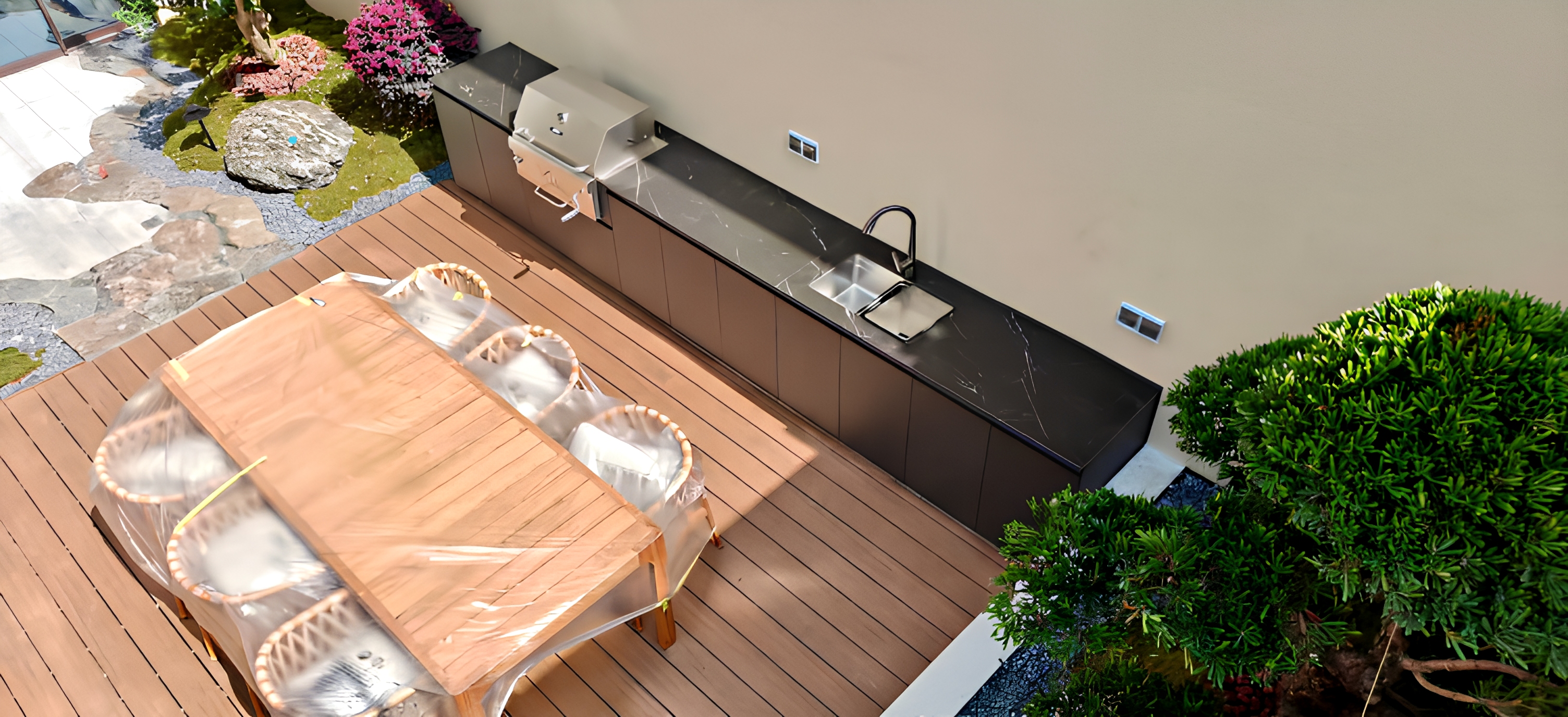
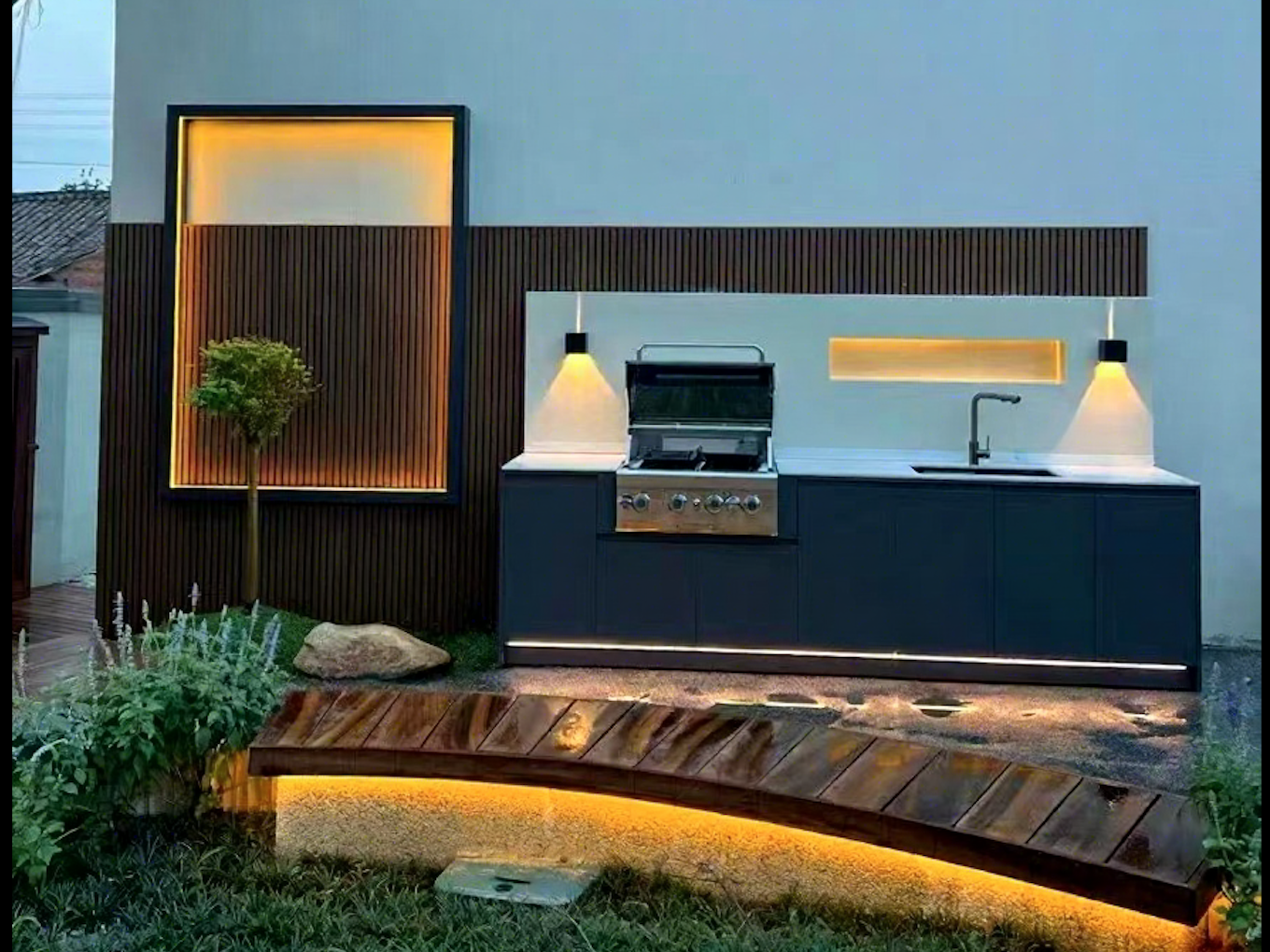
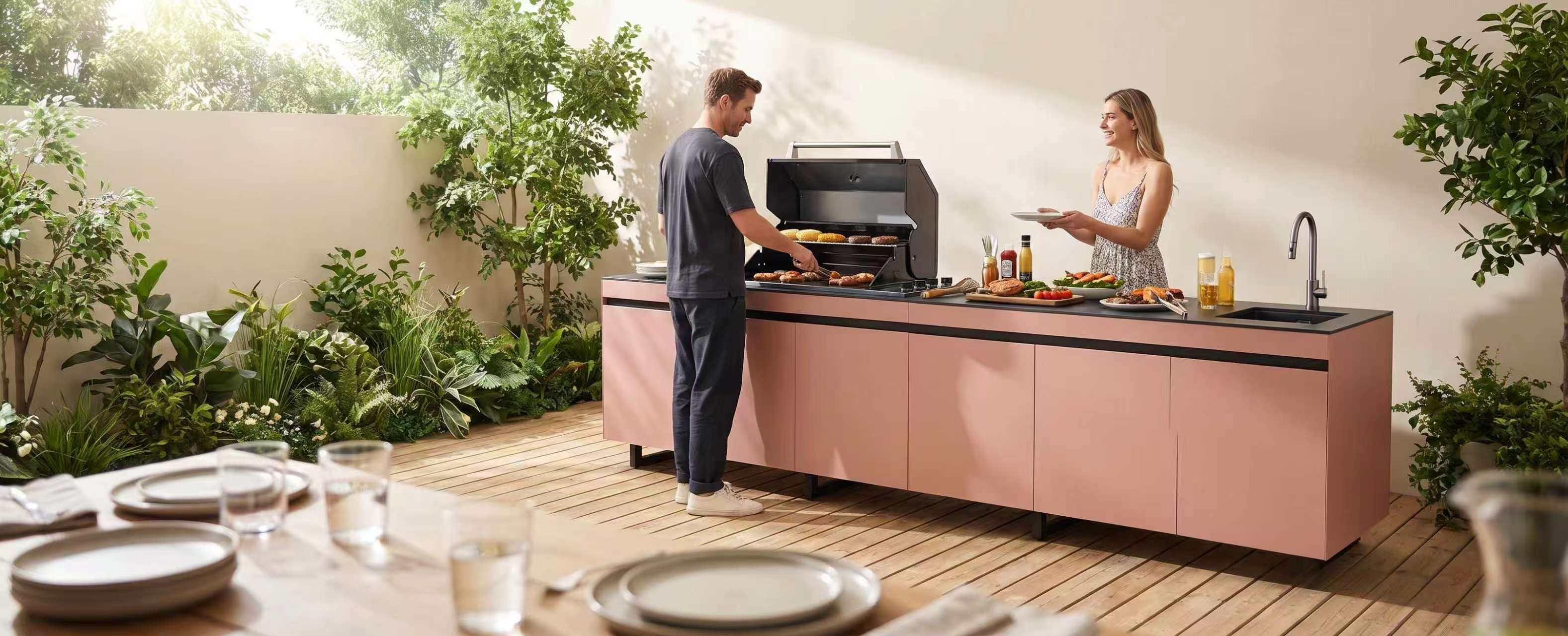
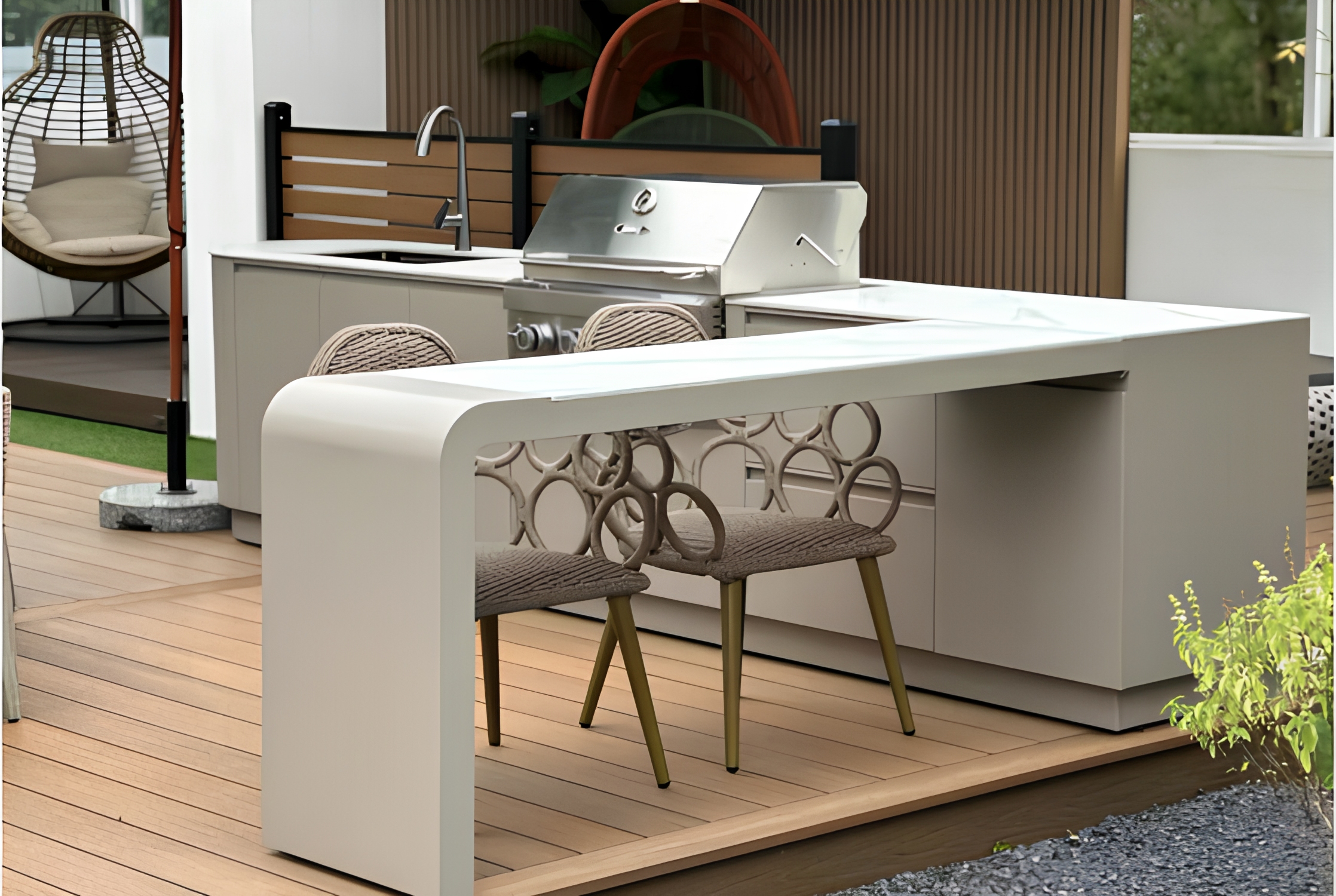
Featured in recent high-end residential projects across the United States, our Thermally Modified Chinese Oak brings unprecedented warmth, beauty, and architectural harmony to both exterior facades and luxury interiors. From seamless outdoor decking and privacy fencing to elegant interior ceiling and wall panelling, this modified timber transforms spaces into inviting, sophisticated sanctuaries.
This is not simply treated timber. Thermal modification changes the wood at the cellular level, converting a beautiful but demanding material into one that holds its appearance and structure through years of outdoor exposure. The result is a product that gives architects the honesty of real wood and the reliability of modern engineering.
Architects, builders, and homeowners share the same affection for real hardwood — and the same frustration with what happens when it meets the outdoors. This article explains the challenges conventional timber faces, how high-temperature thermal modification solves them, and why this oak is becoming a material of choice for design-conscious projects across the United States.
The Outdoor Timber Dilemma
Natural wood has an organic warmth that no synthetic material fully replicates. But used outdoors, conventional timber presents three severe challenges that architects and homeowners know all too well.
Warping & Dimensional Instability
Natural wood expands, contracts, warps, and twists when exposed to rain, sun, and humidity changes. A deck or facade that looks flawless at installation can develop gaps, curves, and misalignments within a single season — compromising both appearance and structural integrity.
Rot, Mold & Insect Decay
Outdoor exposure leads to rapid fungal degradation, moisture buildup, and termite damage. For timber used at ground level — decking, fencing, poolside surfaces — the biological attack is relentless, and the visible damage is often the last stage of a long process of decay.
High Maintenance & Short Lifespan
Frequent staining, sealing, and eventual replacement make traditional timber costly and labor-intensive over time. The true cost of natural wood is measured in maintenance hours and replacement cycles, not just purchase price.
Our Solution: Advanced Thermal Modification
To solve these challenges, our Chinese Oak undergoes a state-of-the-art high-temperature thermal modification process. By permanently altering the cellular structure of the wood through heat, we unlock exceptional performance — without toxic chemicals.
The principle is simple: the modification takes place at high temperature in a controlled process that permanently alters the wood's cellular structure. By removing the compounds that absorb moisture and feed organisms, the heat treatment changes the material's relationship with its environment — less water in, less movement, less decay. And because the change is structural rather than chemical, the performance is not a coating that can wear off, but a property of the wood itself.
Superior Dimensional Stability
Thermal treatment dramatically reduces the equilibrium moisture content of the wood, minimizing shrinking, swelling, and warping by up to 80%. Boards keep their geometry, joints stay true, and facades keep their lines — season after season.
Natural Rot & Pest Resistance
Heat destroys the organic sugars and hemicellulose within the oak, removing the food source for rot, mold, fungi, and insects. The protection is engineered into the material itself, not dependent on surface coatings that wear away with weather and foot traffic.
Rich, Warm Aesthetics
The process enhances the oak's natural grain, producing a deep, rich warm tone that flows effortlessly from indoor living spaces to outdoor patios. The material does not merely perform like a premium hardwood — it looks and feels like one.
Eco-Friendly & Non-Toxic
Because modification is achieved through heat rather than chemicals, the finished product is safe for indoor applications such as ceilings and feature walls, and for children- and pet-friendly outdoor areas including decking and poolside fencing.
Thermally Modified Oak vs Conventional Timber
| Factor |
Conventional Timber |
Thermally Modified Oak |
| Dimensional stability |
Warps, twists, shrinks with moisture |
Movement minimized by up to 80% |
| Rot & pest resistance |
Relies on coatings and treatments |
Engineered into the material |
| Maintenance |
Frequent staining and sealing |
Minimal, low-maintenance |
| Chemical treatment |
Often chemically treated |
Heat-only, non-toxic |
| Aesthetics |
Natural warmth |
Enhanced grain with rich warm tone |
Product Specifications & Applications
Two product lines cover the full range of architectural needs — a sleek cladding profile and a heavy-duty decking board.
Exterior & Interior Wall Cladding / Panelling
| Item |
Details |
| Dimensions |
10mm (Thickness) × 95mm (Width) × 2000mm (Length) |
| Applications |
Exterior Rainscreen Cladding, Interior Ceiling Accents, Feature Wall Panels, Fence Infill |
| Key Benefit |
Lightweight, sleek profile for modern, seamless architectural vertical or horizontal lines |
Heavy-Duty Outdoor Decking
| Item |
Details |
| Dimensions |
21mm (Thickness) × 95mm (Width) × 2000mm (Length) |
| Applications |
Outdoor Poolside Decking, Terraces, Balconies, Patio Walkways |
| Key Benefit |
Engineered thickness for structural integrity, high foot-traffic resistance, and smooth tactile comfort underfoot |
Beyond these core applications, the material suits apartments, schools, supermarkets, workshops, parks, and courtyards — indoors or out.
Why Designers Choose Thermally Modified Oak
Indoor-Outdoor Continuity
One material, one design language. Architects can carry the same warm oak tone from interior ceiling spaces to exterior deck areas, creating a unified architectural narrative that flows seamlessly through the building envelope — a continuity that is difficult to achieve when mixing unrelated materials. For a modern villa, this means the same oak ceiling that warms the living room can flow out onto the terrace deck and continue along the poolside — an unbroken line of material that makes the transition between inside and outside feel architectural rather than accidental.
Proven US Case Studies
This is not an untested product. Thermally modified oak has been successfully installed in modern North American villas and luxury residential developments — projects where performance and appearance are both under constant scrutiny. In demanding US climates, the oak has proven itself through seasonal temperature swings while maintaining its rich, uniform tone.
Low Lifetime Cost
Exceptional longevity and reduced maintenance translate directly into outstanding return on investment. Over the life of a project, the material costs less to own than conventional timber — before even counting the avoided cost of repairs, re-staining, and premature replacement.
Bring Natural Elegance to Your Next Project
Whether you are designing a villa facade, a poolside terrace, an interior feature wall, or a complete indoor-outdoor living space, XIAOZHU supplies premium thermally modified oak in both cladding and decking profiles — with customization and complete project solutions available. Contact the XIAOZHU team to discuss your project.

 EN
EN